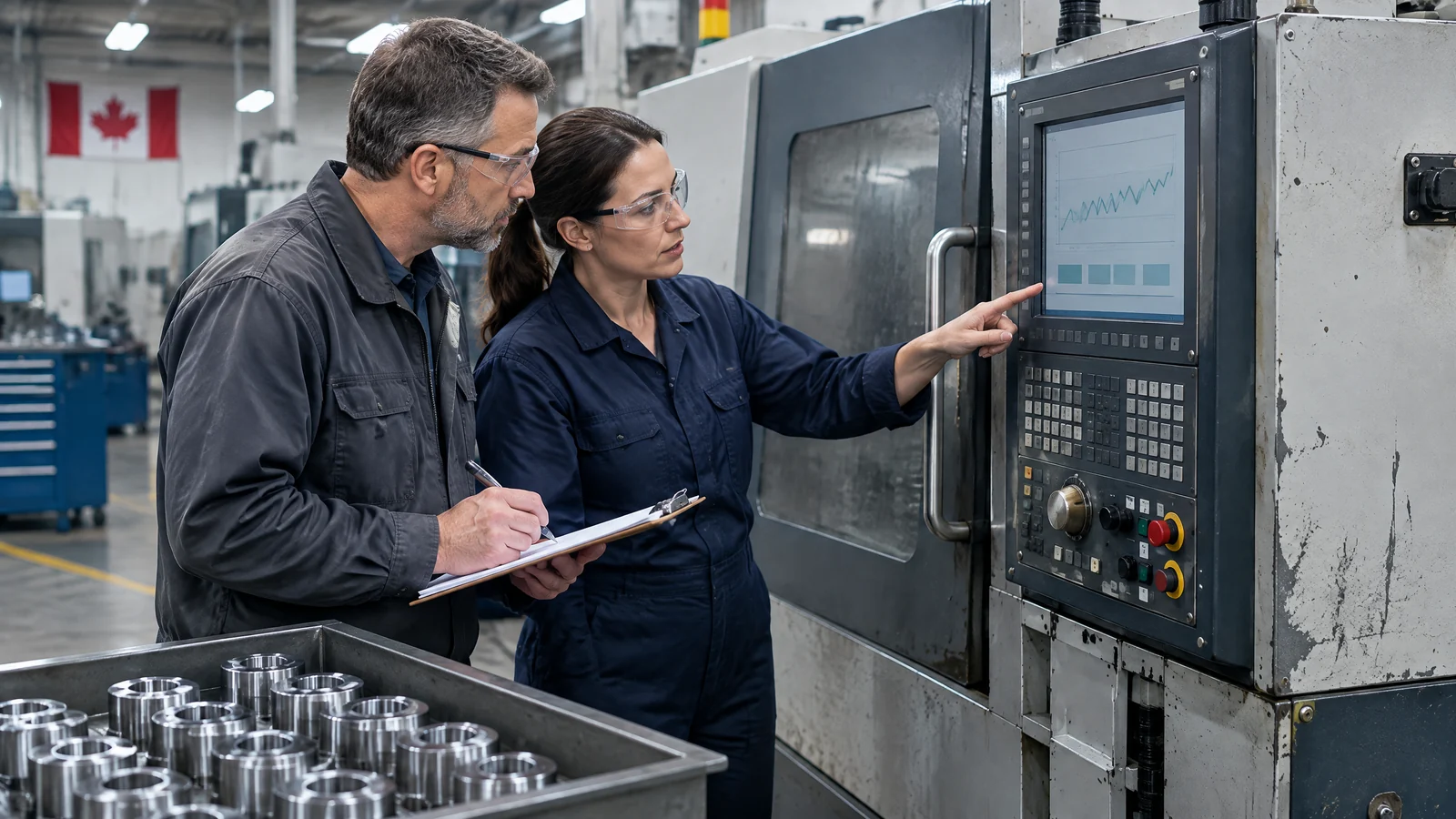
During my years as a journeyman toolmaker and later in engineering, I learned that the biggest problem on a production floor isn’t always the machine making the most noise. Sometimes it’s the one losing six seconds on every cycle.
Six seconds is easy to overlook. Repeated hundreds of times, though, it adds up to real production time and real money. The expensive problems in manufacturing aren’t always dramatic. Some are simply consistent.
A machine waits for material. A process runs slower on the afternoon shift. Neither issue seems urgent on its own, but small losses across a facility can have a substantial impact.
Manufacturers Have Data. The Challenge Is Using It.
Most manufacturers know their production counts, scrap rates and downtime. By the end of a shift, management can usually tell you what happened. The harder question is why.
Machines and PLCs produce information throughout the day, while ERP and maintenance systems hold other pieces of the picture. Some of that information sits in disconnected systems. Some is still recorded manually, and some isn’t captured at all.
Connecting the right information can help operators and managers understand what is happening while there is still time to do something about it.
A Production Number Doesn’t Tell the Whole Story
Imagine a production line with a target of 1,000 units per shift. Yesterday it produced 900. Was the shortfall caused by downtime, slower cycles or a shortage of material? Was the real bottleneck somewhere upstream?
Without that context, you’re diagnosing the production floor from the final score. It’s like trying to improve a hockey team by looking only at whether they won or lost. You need to know what happened during the game.
Consider a machine expected to complete a cycle in 90 seconds that regularly takes 96. At 300 cycles per day, those extra six seconds add up to 30 minutes. That doesn’t automatically translate into 30 minutes of recoverable output; the effect depends on the line’s constraints. But it gives the team a specific loss to investigate.
Perhaps the tooling is wearing, material is arriving late or the delay appears only on one shift. Data won’t always give you the answer. It can tell you where to start looking.
Better Information, Better Decisions
Overall Equipment Effectiveness (OEE) is useful, but the number alone isn’t the goal. If OEE falls, the important question is what changed: availability, performance or quality?
Maintenance teams face a similar challenge. Changes in vibration, temperature or current draw may signal that equipment is behaving differently. The point isn’t to promise a system that predicts every failure. It’s to give the people responsible for the operation better evidence for their decisions.
Start With the Problem, Not the Technology
Too many manufacturing technology projects begin with a platform, an AI application or a sensor and then go looking for a use case. But adding technology doesn’t automatically make an operation smarter. Sometimes it just gives people another system to manage or more data nobody looks at.
I’d rather start by walking the floor. Talk to the operators and maintenance staff. Where are they losing time? Which problems keep coming back? What information do they wish they had? Then ask management where they believe the bottlenecks are, and see whether the data agrees.
The people closest to a process usually know where the trouble is. Good data helps test those observations, measure the impact and decide what is worth fixing.
You Might Already Have What You Need
Better visibility doesn’t necessarily require new machines or a replacement software platform. Manufacturing facilities run equipment from several generations, and old doesn’t automatically mean bad. If a machine works reliably and makes money, replacing it just because something newer exists is not much of a business case.
The first question should be whether existing equipment and systems already hold the information you need. Often, the more valuable work is connecting those sources and presenting the results in a way people can actually use.
Technology Should Follow the Problem
That approach carries through to the work we do at Iversoft. The starting point is understanding the operation: where time is lost, where information is missing and what is preventing people from acting on it.
Sometimes the answer is new technology. Sometimes it’s an integration between systems already in place. Either way, the investment should follow a clear operational need.
What Is Your Operation Telling You?
Every cycle, fault, rejected part and delay tells you something about how your facility runs. Some of that information is already available. Some is scattered across systems. And some disappears because no one is recording it.
The next meaningful productivity improvement may not be another machine or a major capital project. It may start with understanding what is happening in the operation you already have.
Sometimes it starts with six seconds.